


-
HOME
-
ABOUT US
-
ꀁ
PRODUCT
- Agriculture Nets& Floriculture Nets
- Anti insect netting
- Anti shade netting
- Anti bee netting
- Anti hail netting
- Anti bird netting
- Olive netting
- Plant support netting
- Ground cover
- Mulch film
- Shade sail
- Bale wrap netting
- Silage film
- Greenhouse film
- Mesh bag
- Flower protection netting
- Flower harvest netting
- Construction Nets
- Scaffolding netting
- Safety netting
- Privacy fence
- Warning netting
- Industrial Nets
- Blanket netting
- Geotextile
- Geomembrane
- Silo Bag
- Sport Nets & Aquaculture Nets
- Ball netting
- Stadium netting
- Anti escape netting
- Square & diamond netting
- Accessories
- Shade net clips
- Ground nail
- Plant grafting tape
- Silicon tube
- Stitching Pins
- Plastic labels
-
NEWS
- Industry knowledge
- Product Promotion
- Greenhouse
- Nursery
- Fruit Grower
- Construction
- Floriculture
- Aquaculture
- Sports
- Industry
- company news
-
CONTACT US
-
HOME
-
ABOUT US
-
ꀁ
PRODUCT
- Agriculture Nets& Floriculture Nets
- Anti insect netting
- Anti shade netting
- Anti bee netting
- Anti hail netting
- Anti bird netting
- Olive netting
- Plant support netting
- Ground cover
- Mulch film
- Shade sail
- Bale wrap netting
- Silage film
- Greenhouse film
- Mesh bag
- Flower protection netting
- Flower harvest netting
- Construction Nets
- Scaffolding netting
- Safety netting
- Privacy fence
- Warning netting
- Industrial Nets
- Blanket netting
- Geotextile
- Geomembrane
- Silo Bag
- Sport Nets & Aquaculture Nets
- Ball netting
- Stadium netting
- Anti escape netting
- Square & diamond netting
- Accessories
- Shade net clips
- Ground nail
- Plant grafting tape
- Silicon tube
- Stitching Pins
- Plastic labels
-
NEWS
- Industry knowledge
- Product Promotion
- Greenhouse
- Nursery
- Fruit Grower
- Construction
- Floriculture
- Aquaculture
- Sports
- Industry
- company news
-
CONTACT US
The important role of shade nets in greenhouse cultivation.
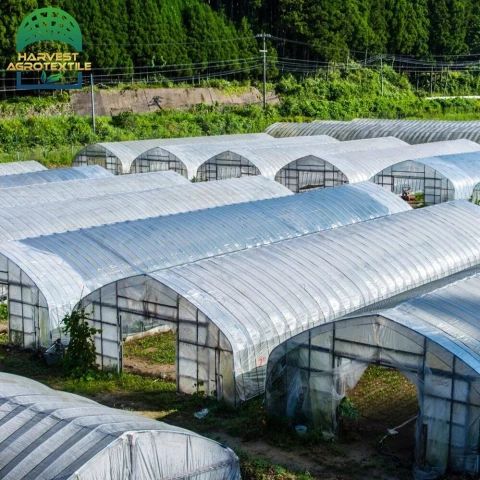
At COP30, the Gates Foundation announced a $1.4 billion investment in climate adaptation tools for smallholder farmers in Africa and South Asia, including technologies to protect crops from drought, heat, and floods. Combined with this $1.4 billion climate adaptation fund, the importance of shade nets as a physical protection tool is increasingly highlighted.
Under the influence of global warming, greenhouse cultivation technology is developing and innovating rapidly. For food security and the development of biodiversity, cutting-edge research into greenhouse cultivation continues to evolve.
As an earlier form of temperature control, agricultural shade nets play an increasingly crucial role in greenhouse cultivation.
Using shade nets in the early stages of planting can increase seedling survival rates and prevent excessively high temperatures from scorching seeds and causing root burn.
As a mesh material, the unique materials and fine mesh of shade nets can reduce the heat delivered by sunlight to the plants, reducing the excess heat needed for plant growth in tropical or hot climates. You can even choose nets with different shading rates (e.g., 70% shading is widely used in subtropical and tropical regions, while 50% shading is widely used in temperate and Mediterranean regions). Shading conditions allow for temperature control, making them more suitable for crop growth.
The netting evenly distributes heat onto the crops, resulting in more uniform fruit shine, more even sugar retention, and ensuring that crops ripen at roughly the same time, producing consistent batches of high-quality produce.
For some crops that don't naturally grow in their current season, shading netting helps slow their growth rate, extending their growth cycle and allowing them to mature and be harvested over a longer period.
The netted planting area allows for better control of variables, reduces soil evaporation, improves irrigation efficiency, and allows for the placement of pipes around the crops, conserving water .
NAVIGATION
—