


-
HOME
-
ABOUT US
-
ꀁ
PRODUCT
- Agriculture Nets& Floriculture Nets
- Anti insect netting
- Anti shade netting
- Anti bee netting
- Anti hail netting
- Anti bird netting
- Olive netting
- Plant support netting
- Ground cover
- Mulch film
- Shade sail
- Bale wrap netting
- Silage film
- Greenhouse film
- Mesh bag
- Flower protection netting
- Flower harvest netting
- Construction Nets
- Scaffolding netting
- Safety netting
- Privacy fence
- Warning netting
- Industrial Nets
- Blanket netting
- Geotextile
- Geomembrane
- Silo Bag
- Sport Nets & Aquaculture Nets
- Ball netting
- Stadium netting
- Anti escape netting
- Square & diamond netting
- Accessories
- Shade net clips
- Ground nail
- Plant grafting tape
- Silicon tube
- Stitching Pins
- Plastic labels
-
NEWS
- Industry knowledge
- Product Promotion
- Greenhouse
- Nursery
- Fruit Grower
- Construction
- Floriculture
- Aquaculture
- Sports
- Industry
- company news
-
CONTACT US
-
HOME
-
ABOUT US
-
ꀁ
PRODUCT
- Agriculture Nets& Floriculture Nets
- Anti insect netting
- Anti shade netting
- Anti bee netting
- Anti hail netting
- Anti bird netting
- Olive netting
- Plant support netting
- Ground cover
- Mulch film
- Shade sail
- Bale wrap netting
- Silage film
- Greenhouse film
- Mesh bag
- Flower protection netting
- Flower harvest netting
- Construction Nets
- Scaffolding netting
- Safety netting
- Privacy fence
- Warning netting
- Industrial Nets
- Blanket netting
- Geotextile
- Geomembrane
- Silo Bag
- Sport Nets & Aquaculture Nets
- Ball netting
- Stadium netting
- Anti escape netting
- Square & diamond netting
- Accessories
- Shade net clips
- Ground nail
- Plant grafting tape
- Silicon tube
- Stitching Pins
- Plastic labels
-
NEWS
- Industry knowledge
- Product Promotion
- Greenhouse
- Nursery
- Fruit Grower
- Construction
- Floriculture
- Aquaculture
- Sports
- Industry
- company news
-
CONTACT US
Biodegradable Mulch Film: Sustainable Agriculture for a Greener Future
What is Biodegradable Mulch Film?
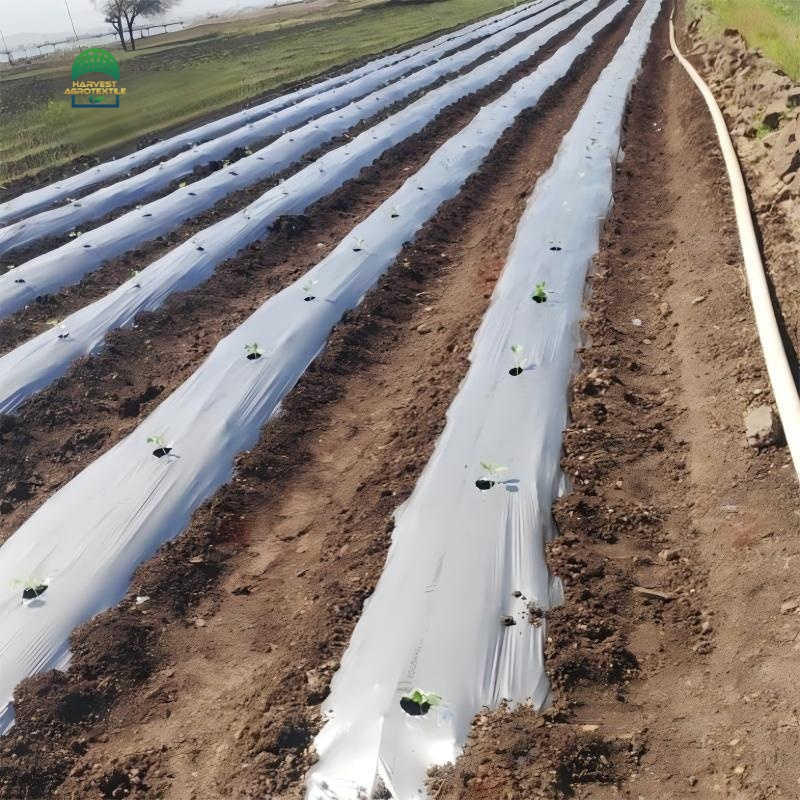
Biodegradable mulch film is a thin, flexible covering made from eco-friendly polymers, such as PLA, PBAT, or starch-based blends. These films serve the same purpose as conventional plastic mulch: conserving soil moisture, controlling weeds, regulating soil temperature, and improving crop yield. However, the key difference lies in their ability to decompose naturally after use, leaving no harmful residues behind.
Benefits of Biodegradable Mulch Film
1. Weed Control
Weeds compete with crops for nutrients and sunlight. Biodegradable mulch film acts as a physical barrier, preventing weed growth while allowing crops to thrive.
2. Soil Moisture Conservation
These films reduce evaporation, keeping the soil consistently moist. This is especially useful in drought-prone regions, reducing the need for frequent irrigation.
3. Temperature Regulation
Biodegradable films help maintain optimal soil temperature, promoting faster seed germination and healthy root development. Some films are black-silver or colored to reflect or absorb sunlight, optimizing growth conditions.
4. Eco-Friendly and Sustainable
Unlike traditional polyethylene mulch, which can leave plastic fragments in the soil, biodegradable mulch breaks down into water, carbon dioxide, and biomass, enhancing soil fertility. This aligns with the growing global demand for sustainable and environmentally responsible farming practices.
5. Reduced Labor Costs
With biodegradable mulch, farmers save time and labor. There is no need to collect and dispose of used plastic mulch, which can be labor-intensive and costly.
Applications in Agriculture
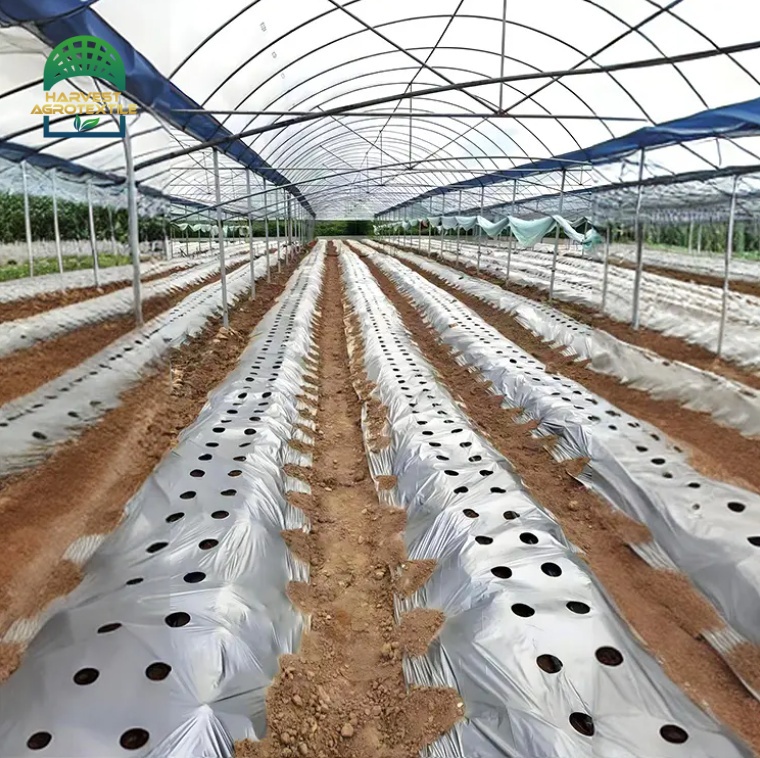
Biodegradable mulch films are widely used in:
-
Vegetable farming (tomatoes, peppers, cucumbers)
-
Fruit cultivation (strawberries, melons, and berries)
-
Field crops (corn, soybeans, and potatoes)
-
Greenhouse farming
The film is suitable for both open-field and greenhouse environments, making it versatile for various climates and crop types.
Choosing the Right Biodegradable Mulch Film
When selecting a biodegradable mulch film, consider:
-
Material composition: Ensure it is certified biodegradable (PLA, PBAT, starch-based).
-
Thickness: Typically ranges from 10–50 microns depending on crop type and climate.
-
Color: Black for weed suppression, silver for heat reflection, or black-silver combination for optimal temperature control.
-
Degradation rate: Match the degradation period with the crop growth cycle.
NAVIGATION
—