


-
HOME
-
ABOUT US
-
ꀁ
PRODUCT
- Agriculture Nets& Floriculture Nets
- Anti insect netting
- Anti shade netting
- Anti bee netting
- Anti hail netting
- Anti bird netting
- Olive netting
- Plant support netting
- Ground cover
- Mulch film
- Shade sail
- Bale wrap netting
- Silage film
- Greenhouse film
- Mesh bag
- Flower protection netting
- Flower harvest netting
- Construction Nets
- Scaffolding netting
- Safety netting
- Privacy fence
- Warning netting
- Industrial Nets
- Blanket netting
- Geotextile
- Geomembrane
- Silo Bag
- Sport Nets & Aquaculture Nets
- Ball netting
- Stadium netting
- Anti escape netting
- Square & diamond netting
- Accessories
- Shade net clips
- Ground nail
- Plant grafting tape
- Silicon tube
- Stitching Pins
- Plastic labels
-
NEWS
- Industry knowledge
- Product Promotion
- Greenhouse
- Nursery
- Fruit Grower
- Construction
- Floriculture
- Aquaculture
- Sports
- Industry
- company news
-
CONTACT US
-
HOME
-
ABOUT US
-
ꀁ
PRODUCT
- Agriculture Nets& Floriculture Nets
- Anti insect netting
- Anti shade netting
- Anti bee netting
- Anti hail netting
- Anti bird netting
- Olive netting
- Plant support netting
- Ground cover
- Mulch film
- Shade sail
- Bale wrap netting
- Silage film
- Greenhouse film
- Mesh bag
- Flower protection netting
- Flower harvest netting
- Construction Nets
- Scaffolding netting
- Safety netting
- Privacy fence
- Warning netting
- Industrial Nets
- Blanket netting
- Geotextile
- Geomembrane
- Silo Bag
- Sport Nets & Aquaculture Nets
- Ball netting
- Stadium netting
- Anti escape netting
- Square & diamond netting
- Accessories
- Shade net clips
- Ground nail
- Plant grafting tape
- Silicon tube
- Stitching Pins
- Plastic labels
-
NEWS
- Industry knowledge
- Product Promotion
- Greenhouse
- Nursery
- Fruit Grower
- Construction
- Floriculture
- Aquaculture
- Sports
- Industry
- company news
-
CONTACT US
Monofilament rashel net VS Flat wire shade net: Key Differences & How to Choose
When shopping for agricultural or outdoor shade netting, most buyers are confused by the two main types: Monofilament rashel shade net and flat wire shade net. Although both are widely used for sun shading, temperature reduction and plant protection, they feature different structures, ventilation performance, durability and application ranges. Understanding their core differences will help you select the most suitable shade net for your garden, greenhouse or construction project.
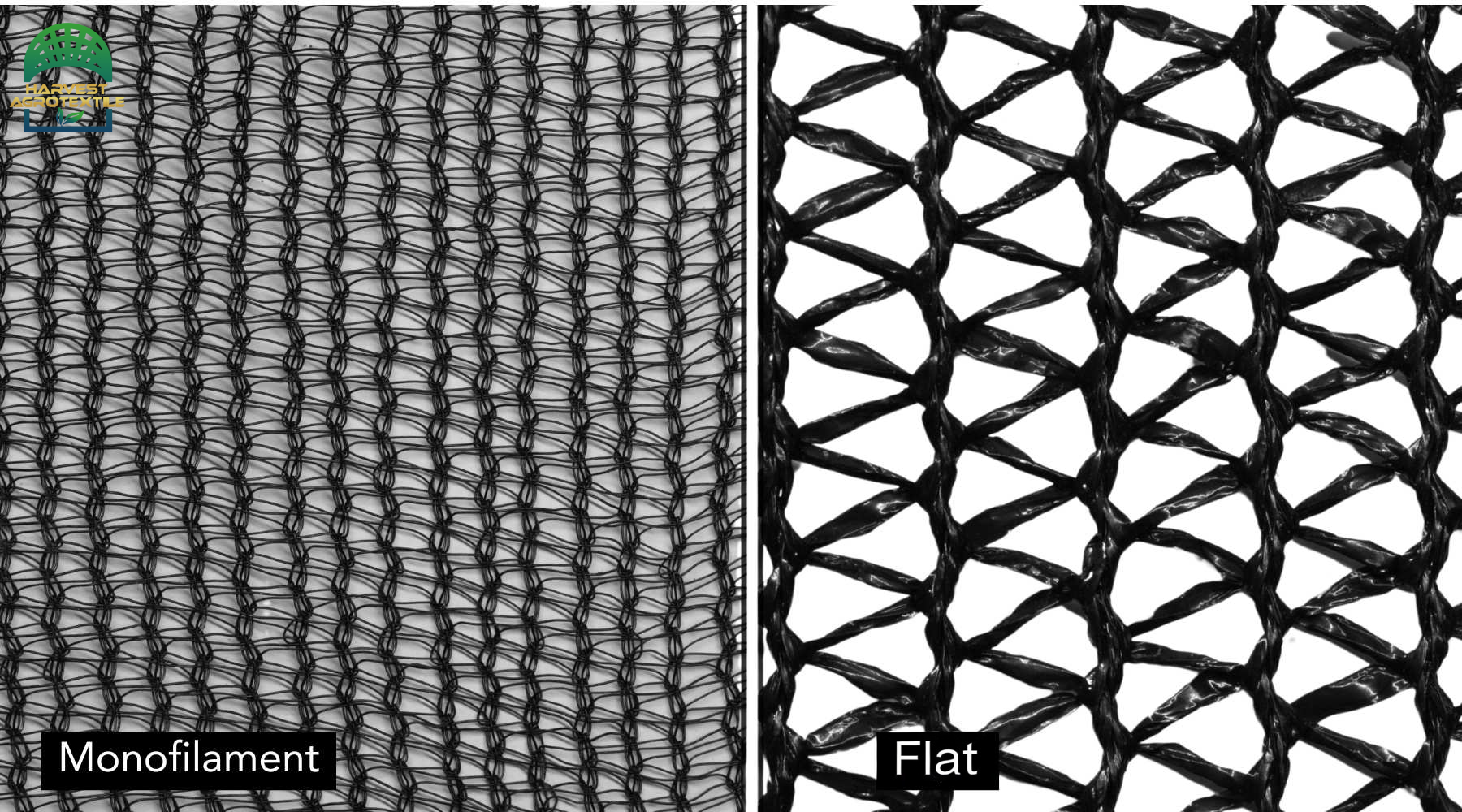
The most intuitive difference between the two lies in their weaving structure and texture. Monofilament rashel shade net is woven with solid round plastic threads, forming a three-dimensional and fluffy mesh surface. The overall texture is soft and lightweight with natural gaps between threads. In contrast, flat wire shade net is made of flattened plastic strips, woven tightly into a smooth, flat and neat net surface with denser and more uniform mesh holes.
These structural differences bring obvious gaps in actual use performance. Monofilament rashel shade net boasts superior air permeability, allowing smooth air circulation and effectively preventing heat and humidity accumulation. It provides soft scattered sunlight with a moderate shading rate between 50% and 80%, which is very friendly for seedlings, potted plants and home gardening. This type of shade net is flexible, easy to install and store.
Flat wire shade net focuses more on shading effect and durability. With a tighter weaving structure, it achieves a higher shading rate of 70% to 90%, delivering better heat insulation and uniform sun blockage. Its biggest advantage is strong toughness, excellent tensile resistance, wind resistance and UV aging resistance. However, its dense structure leads to slightly weaker air permeability, so it is less suitable for high-humidity seedling environments.
In terms of outdoor service life with the same virgin HDPE material and UV stabilizer treatment, monofilament rashel shade net lasts longer. Its round cross-section reduces UV exposure area, slowing down aging and brittleness. It normally serves 4–7 years in open-air environments and performs excellently in windy and humid areas. In contrast, flat wire shade net features a flat tape structure with a larger sun-exposed area, which ages faster under strong UV radiation. Its standard outdoor lifespan is 3–5 years, shorter than round wire net despite its strong tear resistance.
How to Choose the Right Shade Net for Your Needs?
Choosing Monofilament Rashel Shade Net:
You need it for long-term use and want a longer lifespan.
Your crops require good ventilation.
You're using it for home gardening, seedling cultivation, or temporary shading.
You need a medium shading rate (50%–80%).
Choosing Flat Wire Shade Net:
You need a high shading rate (over 70%).
You're using it in greenhouses, construction sites, or orchards.
You're cost-sensitive and looking for the best value.
You need a wider width.
Monofilament rashel mesh and flat mesh shade nets each have their advantages; there's no absolute "good" or "bad." The key is whether they meet your specific needs. Regardless of which type you choose, it's recommended to prioritize products made from brand-new materials by reputable manufacturers to ensure quality and lifespan. Also, select the appropriate shading rate and specifications based on the crop's light requirements and local climate conditions. This detailed comparison aims to help you better understand the differences between the two and choose the most suitable shade net product for your greenhouse or horticultural project.
Visit www.agrotextilenet.com now to learn about our full range of professional shade netting solutions and find the product that best suits your needs.
NAVIGATION
—