


Anti‑Insect Net Specifications & Functions – The Complete Guide
Physical pest control is one of the most effective and sustainable ways to protect your crops. Anti‑insect nets act as a reliable barrier, keeping harmful pests away while reducing the need for chemical sprays. In this guide, we break down the key specifications, functions, and selection criteria so you can choose the right netting for your greenhouse or field.
Practical Specifications of Anti‑Insect Net
Base raw material is UV‑stabilised HDPE monofilament. The standard weaving construction is leno (cross‑lock) weave, which delivers better tear‑resistance and keeps mesh aperture dimension stable under wind tension, which is important for long‑term outdoor installation. Some orchard‑focused grades adopt ladder‑proof knitted construction to resist tearing during field mounting and wind exposure.
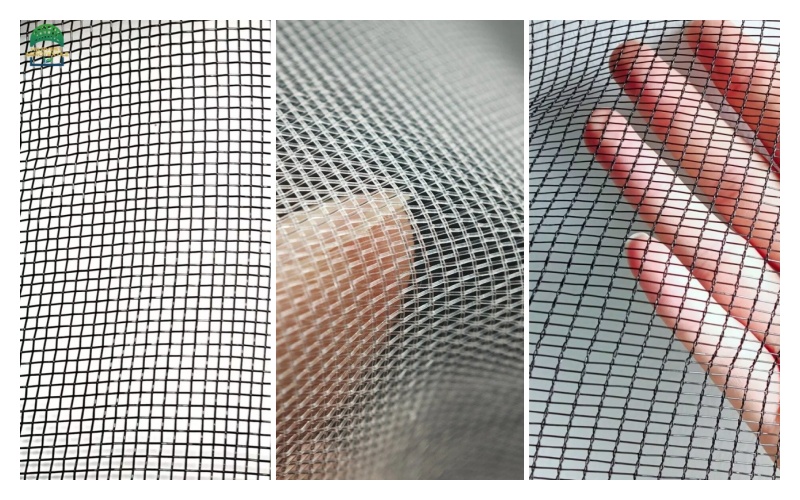
Mesh aperture size is the core functional parameter, directly determining which pests can be excluded.
-Smaller openings block smaller insects but reduce airflow;
- Medium‑size apertures are used against moths, beetles and stink bugs for orchard application;
- Finer apertures target aphids and whitefly for greenhouse ventilation screens;
- Extra‑fine apertures are required for spotted‑wing drosophila control, as documented in agro‑textile technical notes and field research.
| Description | Net weight (gr/m2) | Mesh dim. (mm) | Net width (m) | Roll Length (m) | Sheet measures | Colors | Application |
| Anti-insect net 16×10 | 100-105 | 0,44×0,77 | 1 – 1.20 – 1.50 – 2 – 2.50 – 3 – 3.50 | 100 | Customizable | Customizable |
Greenhouse Orchard Nursery Garden Vegetable farm |
| Anti-insect net 20×10 | 120-125 | 0,28×0,77 | 1 – 1.20 – 1.50 – 2 – 2.50 – 3 – 3.50 | 100 | |||
| Anti-insect net 11×11 | 145 | 0,69×0,69 | 2,00 – 3.20 | 100,200 | |||
| Net anti-drosophila suzuki | 110-145 | < 1 | 2,5 – 5 – 7,5 – 10 | 200 | |||
| Cimi-net anti-carpocapsa | 75-85 | 1,3 x 4,7 | 2,5 – 5 – 7,5 – 10 | 200 |
If you need non‑standard width or reinforced‑edge custom netting, please visit our [custom agricultural insect net] page for further information.
Practical Functions of Anti‑Insect Net
Anti‑insect net is manufactured from UV‑stabilised HDPE monofilament, mainly deployed on greenhouse vents, side walls, or as full‑row covering over orchards and low vegetable tunnels.
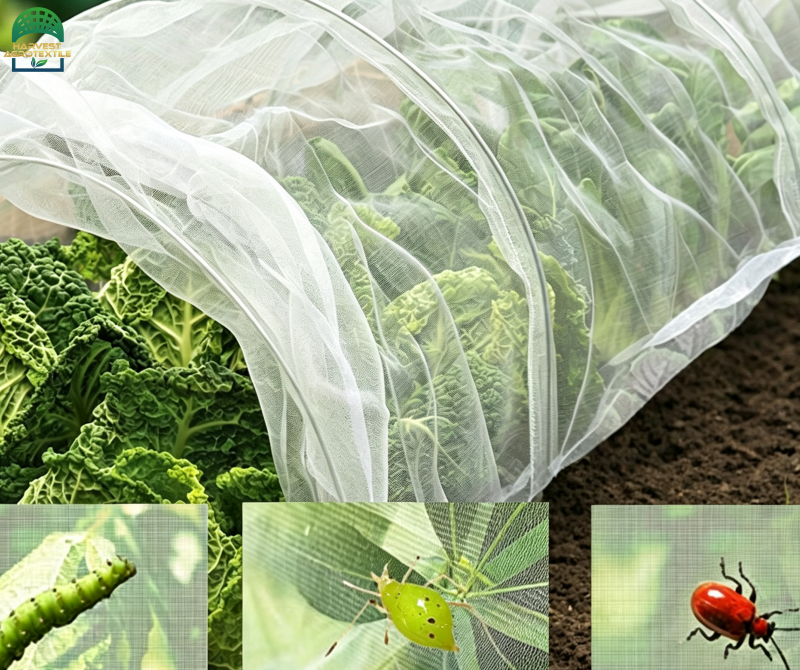
First, it delivers physical pest exclusion and reduces pesticide dependency. Dense woven openings block target insect species from reaching crops. Common target pests referenced in European agro‑textile documentation include aphids, whitefly (Bemisia tabaci), Tuta absoluta, codling moth (Cydia pomonella), brown marmorated stink bug (Halyomorpha halys), spotted‑wing drosophila (Drosophila suzukii) and Japanese beetle (Popillia japonica).
Second, it delivers defined light‑shading properties linked to net colour. Translucent white anti‑insect net brings low shading factor of around 9‑10 %, preserving most natural sunlight for plant photosynthesis, suitable for vegetable greenhouses and seedling nurseries. Black‑coloured anti‑insect net combines insect blocking with shading‑net functionality, achieving 60‑80 % shading rate for crops requiring light reduction.
Third, it retains air‑and‑water permeability. Unlike sealed plastic film, woven anti‑insect net allows air movement and rainwater penetration. Good airflow helps avoid trapped high humidity underneath covers, lowering risks of mould and fungal‑disease build‑up. Finer‑mesh variants will reduce airflow to some degree; this is a documented trade‑off when selecting very small apertures.
How to Select Suitable Anti‑Insect Net
Selection should start with your target pest species, because mesh aperture is the decisive factor. Do not over‑specify ultra‑fine mesh if you only need to block larger‑bodied moths or beetles: excessively fine mesh raises material cost and brings measurable airflow reduction under greenhouse conditions.
Consider your growing environment. Open‑field orchard sites exposed to strong wind should select ladder‑proof higher‑grammage grades for tear resistance. Protected‑greenhouse vent applications can use medium‑weight leno‑woven products.
Match net colour and shading performance to crop light requirements. Leafy‑vegetable seedlings generally perform well under low‑shading translucent‑white net. Light‑sensitive crops may benefit from black dual‑function insect‑and‑shade net.
Anti‑insect net offers tangible benefits for sustainable horticulture: reduced chemical‑pesticide pressure and physical crop protection. Successful deployment relies on selecting mesh aperture, weight and colour matched to your target pests and site conditions, paired with careful gap‑free installation.If you would like to request a quotation, please go to our [contact us] page and share information about your target pests, application type and dimension requirements.