


The Ultimate Guide to Using Extruded Plant Support Netting for Flower Farming
Extruded plant support netting, also known as extruded trellis netting, is a rigid square mesh manufactured via plastic extrusion and bi-axial stretching, usually from UV-stabilized polypropylene (PP) or HDPE. Unlike woven or knitted trellis products, extruded netting keeps its fixed grid shape after cutting and will not unravel easily, which makes it widely adopted in commercial cut flower farms and home flower gardens for stem lodging prevention, airflow improvement and harvest simplification. This complete guide will elaborate on its verified benefits, size selection standards, scientific installation methods, and maintenance tips for flower planting.
What Benefits Does Extruded Support Netting Bring to Flower Cultivation
Multiple horticulture field tests from floriculture suppliers confirm that properly installed extruded netting delivers measurable improvements for flower planting:
1. Prevent stem bending and lodging
Long-stem flowers such as chrysanthemums, carnations, gladiolus, snapdragons, dahlias and lisianthus easily lodge under wind, heavy bloom weight or overhead watering. Horizontal layered extruded netting holds stems upright, producing straighter flower stalks and reducing downgrade rates for cut flowers.
2. Boost air circulation and light penetration
The open square mesh allows sunlight and air to pass through the canopy, reducing trapped humidity inside dense flower beds. Lower humidity suppresses botrytis and powdery mildew infection, cutting down fungicide application frequency in commercial flower production.
3.Reduce labour cost
Extruded netting forms a continuous support framework; growers only need to gently guide young stems through mesh openings, instead of tying each stem individually. Industry data shows it can cut stem-support labour by 40–60% for commercial cut flower farms.
4. Reusable and chemical-resistant
The UV-stabilized extruded netting withstands common agricultural fertilizers and foliar sprays; it is easy to clean and roll up, and can be reused over multiple growing seasons.
How to Choose the Right Mesh Size for Different Flower Varieties
- 10 cm × 10 cm: Ideal for medium-stem cut flowers, carnations, snapdragons, small chrysanthemums. It provides dense support to stop thin stems from leaning.
- 12.5–15 cm: The most universal option, recommended for dahlias, gladiolus, lisianthus, zinnias and most mixed cut flower beds. Wider openings simplify harvesting without cutting blooms.
- 15–20 cm: For climbing ornamental flowers, sweet peas, clematis and large vigorous vines. Larger openings let tendrils wrap around mesh strands naturally.
Two Main Installation Modes: Horizontal Multi-Layer & Vertical Trellis
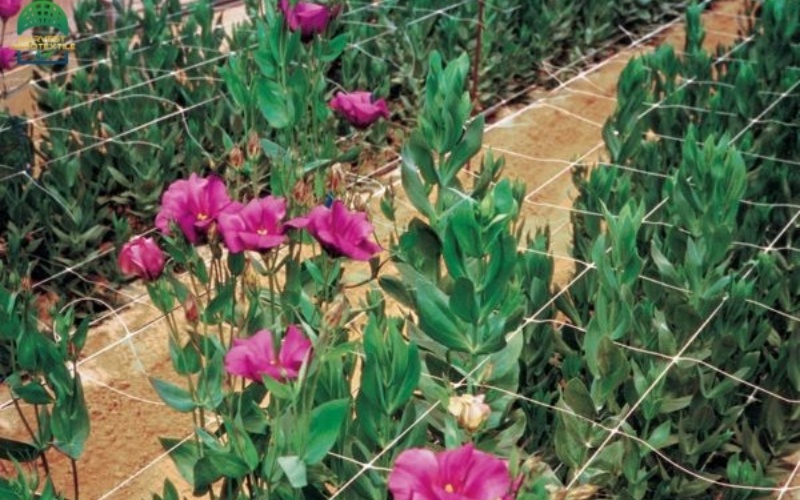
Method 1: Horizontal Multi-Layer Netting for Long-Stem Cut Flowers :This is the dominant setup in commercial flower greenhouses and outdoor cut flower rows.
1. Prepare support posts: Drive wooden, fiberglass or metal T-posts along both sides of planting beds. Space posts 2–3 meters apart, embed at least 30 cm deep into soil to resist wind.
2. Install the first net layer when seedlings reach around 15 cm (6 inches) height. Stretch the netting tightly between posts, fix with zip ties or plastic clips at 30–45 cm above the soil surface.
3. Add upper layers progressively as flowers grow. For varieties taller than 90 cm, add a second layer at 80–90 cm height, and a third layer for ultra-tall cultivars. Install each new layer when stems grow 15–20 cm above the previous net layer.
4. Gently guide young stems through mesh holes by hand. Do not force thick mature stems through small openings, which can tear stems and create infection entry points for pathogens.
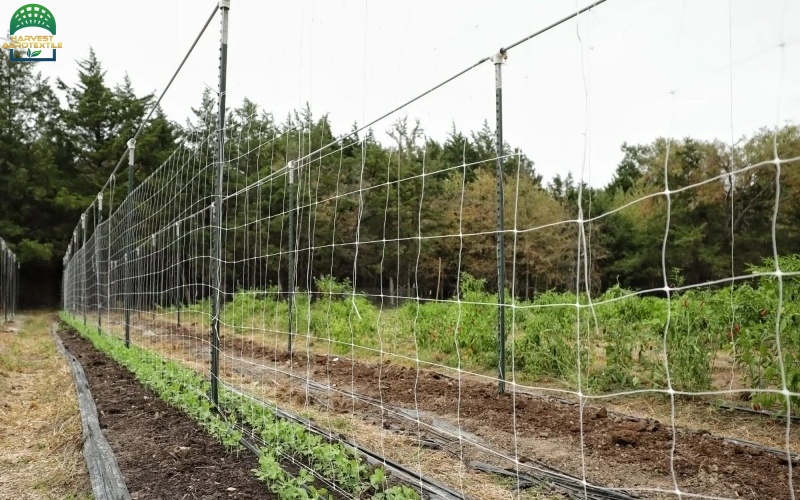
Method 2: Vertical Trellis Netting for Climbing Flowers:Use vertical installation for sweet peas, clematis, climbing roses and nasturtiums.
1. Set posts along planting rows every 3–5 meters. Stretch extruded netting vertically between posts, fasten securely with ties. Leave a 10–15 cm gap from ground level to reduce contact with wet soil.
2. When vines start to produce tendrils, manually weave stray stems back toward the net 2–3 times weekly. Use soft plant clips if tendrils fail to attach naturally.
3. Trim overgrown side shoots regularly to maintain good canopy airflow.
Extruded plant support netting delivers a simple, reusable and cost-effective support solution for commercial cut flower farms and hobby flower growers. Select proper mesh size, follow horizontal multi-layer installation for long-stem flowers or vertical trellising for climbing blooms, and maintain proper tension during the whole growing cycle. You will get straighter stems, cleaner blooms, reduced disease pressure and simpler harvest operations.
If you are looking for bulk extruded trellis netting for flower cultivation, visit our product category: Agricultural Extruded Support Netting.