


Extruded Plastic Plant Support Netting vs Galvanized Metal Support Netting: Full Comparison for Horticulture
For commercial growers and gardeners choosing trellis systems for cut flowers, climbing vegetables and vine ornamentals, two mainstream support materials stand out: extruded plastic plant support netting and galvanized metal support netting. Both can hold upright stems and climbing vines, yet they differ sharply in material properties, handling, service life, cost and suitable growing environments. This side-by-side comparison breaks down their real pros and cons, helping you select the optimal support net for your farm or greenhouse.
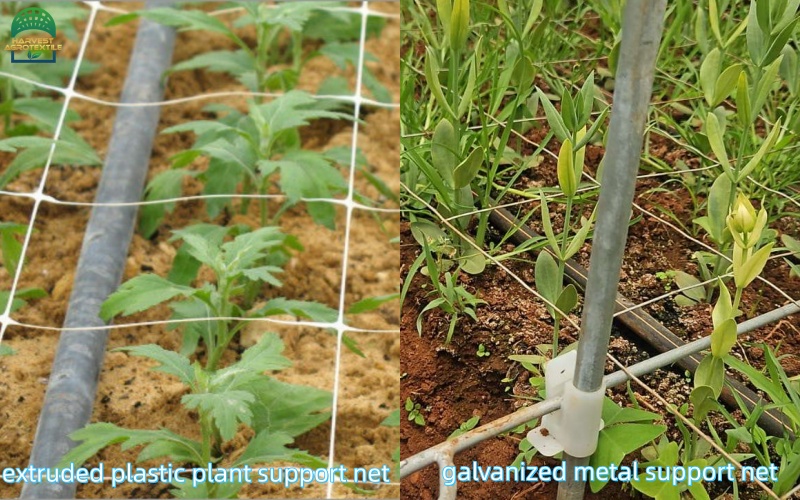
Material & Structure Difference
Extruded plastic plant support netting is normally manufactured from UV-stabilized polypropylene (PP) or HDPE through extrusion and biaxial stretching. It forms rigid, fixed square mesh. Cutting will not cause the mesh to unravel, so growers can tailor sizes on site easily.
Galvanized metal support netting is welded or woven wire mesh made from low-carbon steel with a hot-dip galvanized coating. The galvanized layer protects the steel substrate from rust. Its mesh shape stays rigid as well, but cutting will expose bare steel edges where the protective zinc coating is removed.
Service Life & Weather Resistance
High-grade UV-stabilized extruded plastic support netting delivers 5–8 years of service outdoors. Direct sunlight gradually degrades plastic polymers; non-UV grades may turn brittle and break within one growing season. Plastic netting is fully resistant to weak acid, fertilizer solution and most foliar sprays, with zero risk of chemical reaction with crop nutrients.
Galvanized metal netting typically lasts 10–15 years in dry environments. However, in high-moisture greenhouses, coastal salt-laden air, or acidic soil environments, the zinc coating slowly wears away. Once the galvanized layer fails, exposed steel rusts quickly. Rust particles may drip onto leaves, stems and blooms and cause staining on cut flowers.
Weight & Installation
Extruded plastic netting is lightweight. One person can unroll, stretch and fix it to posts without heavy tools. It can be cut on-site with utility knives or scissors. For multi-layer horizontal flower support systems, lightweight plastic netting creates less downward load on posts, reducing requirements for heavy-duty support structures.
Galvanized metal netting is heavy and stiff. It requires two or more workers for handling and installation. Cutting needs bolt cutters, and raw cut edges are sharp and may scratch plant stems or workers. Heavy weight demands stronger posts and firmer anchoring, which raises material and labor investment during setup.
Crop Safety & Plant Compatibility
Plastic extruded netting has smooth, rounded strand surfaces. It will not cut or abrade soft flower stems, vines and young shoots. This feature makes it widely preferred for high-value cut flowers such as dahlia, lisianthus and snapdragon.
Galvanized wire has hard, sharp edges especially after cutting. Vines and soft stems rubbing against wire may develop wounds, creating entry points for botrytis and other pathogens. In flower cultivation, the risk of rust stains on petals is another obvious downside.
Cost Analysis
For upfront purchase cost, extruded plastic plant support netting has a lower initial investment. UV-stabilized plastic netting can be dismantled, cleaned and reused for multiple crop cycles if protected from strong sunlight during off-seasons. At the end of lifespan, HDPE plastic net can be recycled, and biodegradable variants break down naturally without solid waste residue.
Galvanized metal support netting requires higher capital spending at the start. Thanks to its long service life in dry environments, the amortized annual cost may be competitive for permanent trellis structures. Damaged rusted metal mesh is hard to repair, and transportation cost rises due to its heavy weight.
Best Suitable Application Scenarios
Extruded plastic plant support netting
-
Commercial cut flower beds, multi-layer horizontal trellising systems
-
Greenhouse seasonal cultivation
-
Annual climbing crops like sweet peas, beans and cucumbers
-
Farms needing frequent dismantling, cleaning and storage between growing cycles
-
Coastal high humidity sites where metal corrosion risk is a concern View our product: Extruded PP Plant Support Netting for Cut Flowers
Galvanized metal support netting
-
Permanent trellises for perennial fruit vines, berry bushes and climbing roses
-
Outdoor orchard systems with long-term fixed layout
-
Heavy, large mature vines that need extreme structural strength
-
Dry inland locations with low humidity and minimal salt exposure
Extruded plastic plant support netting balances low initial cost, easy handling and corrosion resistance, making it a flexible choice for seasonal and greenhouse crop support. Galvanized metal support netting provides superior rigidity and long service life in dry locations, ideal for permanent agricultural structures.Farmers should evaluate local climate, crop weight, planting cycle and budget before final selection.