


Flower Crop Protection Netting: Functions & Application of Flower Support Net, Bud Net and Shade Net
Flower cultivation, whether for commercial greenhouse production, cut flower farming or home gardening, relies on specialized netting materials to protect buds, support stems and regulate sunlight. Growers commonly use three core types of flower netting: flower bud protection net, plant support trellis net, and shade net with shading rates ranging from 30% to 70%. Each serves a distinct function and can be combined to improve flower quality, reduce crop loss and stabilize growing microclimate.
Plant Support Net: Prevent Stem Breakage for Tall Flower Varieties
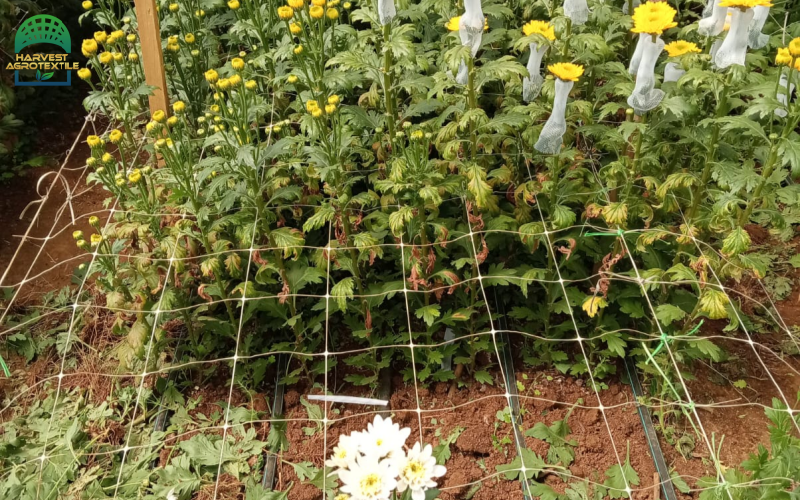
Plant support net, also called trellis net for flowers, is a horizontal grid net installed above flower beds or inside greenhouses. It holds flower stems upright, prevents lodging and stem bending when blooms gain weight, especially suitable for tall flowers like chrysanthemums, gladiolus, snapdragons and lisianthus.
Most commercial plant support net is knitted from HDPE (high-density polyethylene) with UV stabilizer added. The grid size can be customized, and the net remains flexible yet strong under repeated stretching. University extension research notes that stem support netting lowers flower lodging losses significantly; heavy rain or wind events often cause broken stems for unsupported cut flowers, leading to direct yield loss.
The net is stretched in multiple layers as flowers grow. Young shoots grow through the mesh openings, and the grid supports stems as they elongate. This keeps blooms at uniform height, simplifies harvesting and improves flower grade for cut flower markets. For climbing flowering vines, this net can also work as a climbing support structure.
Flower Bud Net: Dual Protection for Growing Buds and Flower Transportation
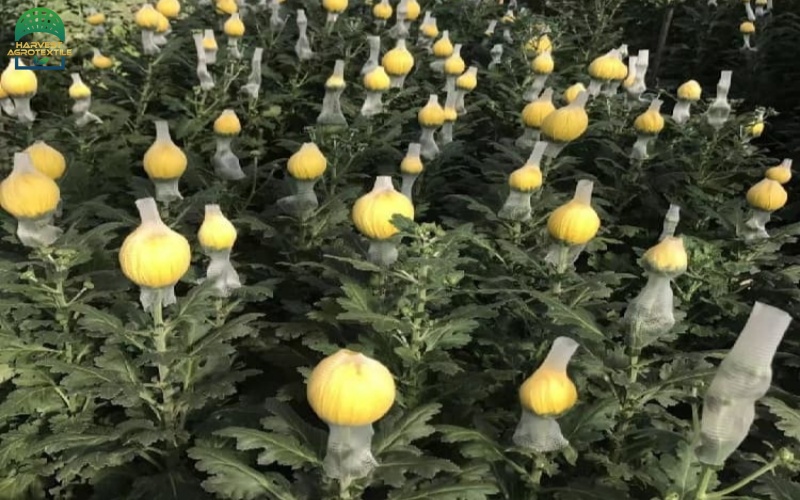
Flower bud net is a professional horticultural protective tool specially designed for high-value cut flowers, widely applied in rose, carnation, peony and lisianthus planting. It features a soft and flexible structural design that fits closely to flower buds and blooming flowers, bringing dual core functions of field growth protection and post-harvest transportation protection, which solves two major quality loss problems in flower planting and sales.
During the field cultivation stage, flower bud net acts as a physical barrier for tender flower tissues. It effectively isolates external adverse factors, preventing petal scratching, tearing and bud damage caused by natural wind friction, rain impact and crawling insect contact. It also avoids irregular bud deformation and scattered petal growth, ensuring that each flower grows in a standard and full shape, greatly improving the overall uniformity and ornamental value of flower products. For open-field flower farms exposed to harsh natural environments, this protective net can significantly reduce the rate of defective flowers in the growth cycle.
In addition to in-field protection, flower bud net plays an irreplaceable role in post-harvest sorting, packaging and long-distance transportation of cut flowers. After picking, high-quality flowers are extremely vulnerable to extrusion, friction and collision damage during stacking, handling and logistics delivery. Wrapping flowers with bud net can fix the flower shape stably, isolate friction between different flower heads, and prevent petal falling, flower head deformation and surface abrasion during transportation. It perfectly locks the fresh state and appearance quality of cut flowers, effectively reducing commodity loss in the whole supply chain from farm to market.
30%–70% Shade Net: Professional Light & Microclimate Regulation for Flower Planting
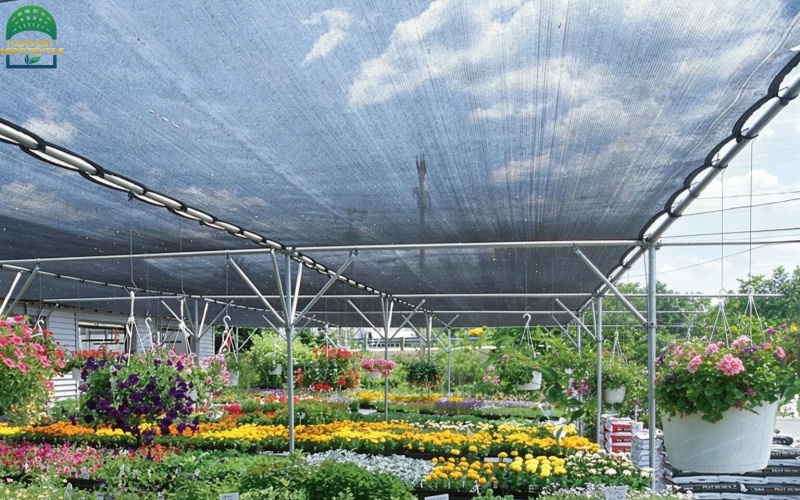
Shade net is one of the most essential and widely used auxiliary facilities for modern greenhouse and open-field flower cultivation, with mainstream shading rates covering 30% to 70%, fully covering the light demand of almost all common ornamental flowers. According to horticultural extension guides from Washington State University, scientific shading management is the key to avoid flower sunburn, growth stagnation and quality degradation in high-temperature and strong-light seasons.
The core function of flower special shade net is to reasonably filter natural sunlight, adjust the light intensity and spectral range received by flower plants, and build a stable and suitable growth microclimate. Excessively strong direct sunlight will easily burn flower leaves and tender petals, cause leaf yellowing and withering, and inhibit flower bud differentiation and blooming. The shade net can effectively block excessive solar radiation, reduce surface temperature of plant leaves and soil, relieve high-temperature heat stress for flowers, and reduce plant transpiration, thereby saving irrigation water and maintaining stable soil humidity.
Different from rigid fully covered shading materials, the breathable and permeable structure of the shade net ensures smooth air circulation and normal rainwater penetration. It avoids the problems of high humidity, poor ventilation and mold breeding caused by closed shading, and effectively reduces the incidence of flower diseases and insect pests. Growers can flexibly select the appropriate shading rate according to the light preference of flower varieties, local seasonal climate and planting environment. Sun-loving flowering varieties can be matched with low shading rate nets, while shade-tolerant delicate flowers adapt to high shading rate specifications, so as to maximize growth efficiency and improve flower yield and quality throughout the planting cycle.
How to Combine These Three Nets in Flower Farms
Professional flower growers often combine all three net materials in one planting cycle. In early growth stages, plant support net is installed to hold up stems. When buds start to form, each flower bud is sleeved with flower bud net for petal protection. Meanwhile, 30%–70% shade net is mounted above the greenhouse or field, selected based on flower species and local seasonal sunlight intensity.
This combination addresses three major risks in flower cultivation: stem lodging, bud damage and sunburn. It helps growers maintain consistent flower quality and reduce waste. When selecting net materials, growers should verify UV resistance, tensile strength and biodegradable certification for eco products, rather than only comparing unit price.
Net materials are simple but high-impact tools for modern flower cultivation. Flower bud net protects blooms, plant support net stabilizes flower stems, and 30%-70% shade net manages light and temperature. Choosing the right material and specification according to flower varieties and local climate helps both commercial flower farms and home gardeners achieve better flower quality and higher survival rates.