


Crop Protection Against Harmful Insects: Selecting the Right Agrotextile Insect Net
Harmful insect pests represent a major threat to greenhouse and open field agriculture. Pests can feed on plant tissues, destroy fruits, and transmit plant viruses, bringing heavy economic losses to growers. Traditional chemical pesticide applications carry growing environmental concerns and market restrictions, pushing the agriculture industry toward physical, textile based pest blocking solutions. Agrotextile insect screens create a physical barrier to keep damaging insects away from crops, cutting reliance on plant-protection chemical products while maintaining suitable growing micro conditions for plants.
Physical insect exclusion netting has become a foundational tool for modern sustainable agriculture. Made from UV-stabilised HDPE monofilament, these woven screens form a passive physical barrier, blocking pest insects from reaching crops while permitting sunlight, natural air circulation and irrigation water to pass through. By reducing pest pressure, growers can cut pesticide applications, lower residue levels on harvested produce and protect crops from insect-transmitted viral diseases.
Different mesh counts deliver distinct protection performance. The balance between pest blocking efficiency, air permeability and light transmittance changes as mesh density increases. Choosing the correct mesh grade depends on target pest species, crop type, greenhouse ventilation capacity and local pest pressure.
Mesh Size Specifications
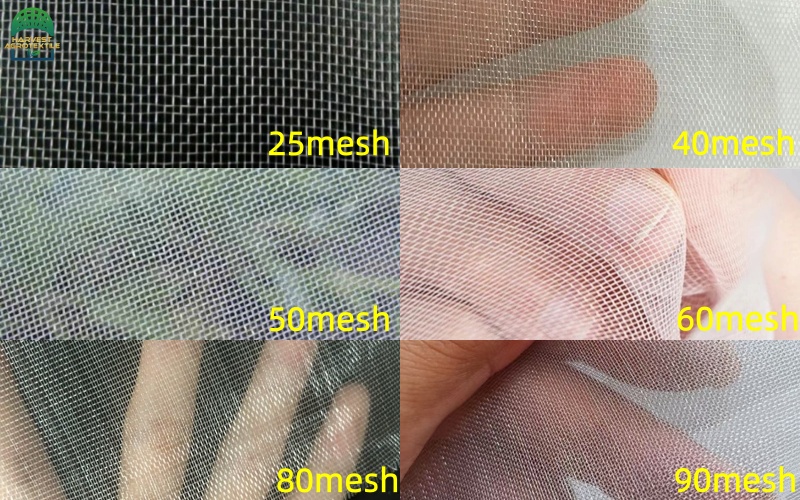
The table below presents typical performance data for HDPE monofilament insect screens across the most common mesh configurations. Actual values depend on yarn diameter, weave structure, and specific product design.
| Mesh | Air Passage | Ventilation Reduction | Primary Target Insects | Ideal Applications |
| 25 | 54–63% | 24–27% | Drosophila suzukii, Tuta absoluta | Fruit orchards, vineyards, tomato greenhouses where airflow is critical |
| 40 | 44% | 30% | Trialeurodes vaporarium, Bemisia argentifoli | Temperate-climate greenhouses with moderate whitefly pressure |
| 50 | 36–47% | 30–32% | Bemisia tabaci, Aphis | Tomato, pepper and leafy green greenhouses, greenhouse vents and tunnel openings. |
| 60 | 40% | 31% | Bemisia tabaci, Aphis | Seedling propagation houses, flower nurseries, vegetable zones with persistent thrip and whitefly population. |
| 80 | 26% | 42% | Frankliniella occidentalis, Thrips tabaci | Thrips-prone areas; ornamental and high-value vegetable crops |
| 90 | 22% | 45% | Ultra-small thrips and micro insect pests | Maximum thrips pressure; operations with supplemental ventilation capacity |
Key Benefits of Physical Insect Exclusion Netting
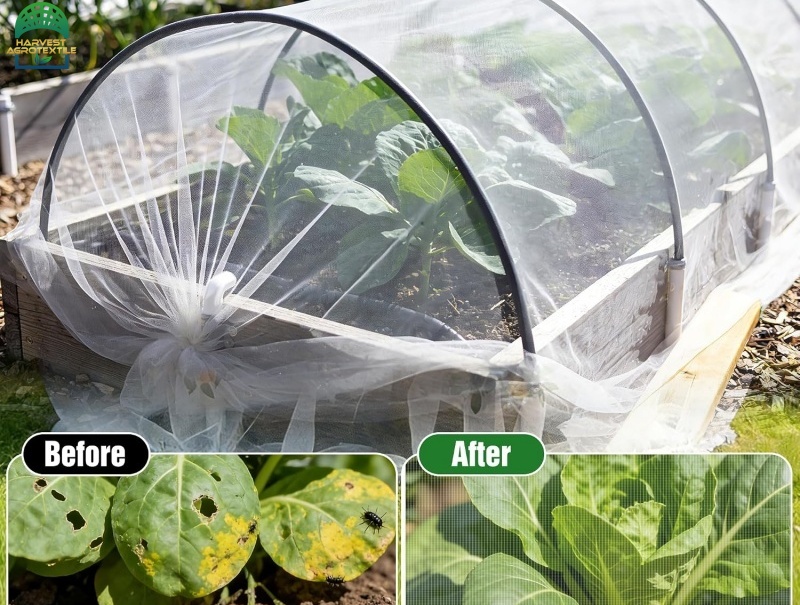
When installed correctly, insect netting delivers multiple long-term advantages beyond pest blocking. It cuts the frequency of pesticide sprays, lowering production costs and helping growers meet international food safety standards. The netting is manufactured with UV stabilisers, resisting degradation under prolonged outdoor sunlight exposure to guarantee multi-year service life.
Unlike chemical treatments that work only for a limited period, the physical barrier works continuously day and night. It does not harm beneficial pollinators when properly configured. For tunnel systems, growers can create separated zones: pollination zones with mesh that keeps bees inside, and crop protection zones to block harmful pests.
Stallation Best Practices
Mesh selection is only the first step. Proper installation is critical to achieving full pest protection. Insect screens are commonly fitted on greenhouse sidewalls, ridge vents and tunnel openings. All frame edges, joints and overlaps must be fully sealed. Even small gaps around doors, pipes or frame connections can become entry points for tiny insects, rendering the whole net ineffective.
Routine inspection is recommended throughout the growing season. Check for tears, loose seams and sagging sections. Damaged netting should be repaired or replaced promptly.
Insect screens are a proven, non-chemical way to protect crops from pests and the viruses they transmit. The right mesh size depends on the smallest insect you need to exclude, the airflow requirements of your crop, and your greenhouse design. By understanding the relationship between mesh count, air passage, and ventilation reduction, you can choose a screen that protects your crop without compromising the growing environment. Browse our insect nets to compare specifications, or contact our technical team for help selecting the right mesh for your operation.