


Custom Netting: Drone Netting & Pool Netting In Hot Sales
A net can look strong and still be wrong for the application. That is the main reason custom netting matters in drone defense and pool safety. In one case, the net has to stop an aircraft without letting it slip through or tear the mesh. In the other, it has to hold a load, fit the pool, and stay reliable in sun and water for years.
Off-the-shelf netting can work for light-duty jobs. But when the net is part of a safety or security layer, the specification has to match the actual site. This article looks at what that means for drone netting and pool safety netting.
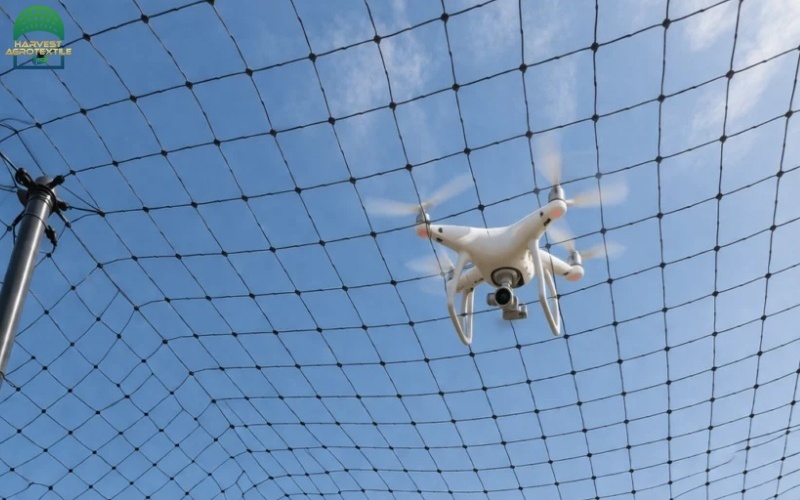
Drone Netting: Match the Mesh to the Threat and the Mounting
Drone netting works by catching the aircraft in the mesh and wrapping the rotor. For that to happen, the mesh opening, cord diameter, and strength need to suit the drone class and the way the net is installed. Too open a mesh lets small aircraft slip through; too heavy a net is slow to deploy and hard to tension.
In most commercial and perimeter applications, the working materials are high-strength polymer fibers rather than metal. HDPE is common for general perimeter coverage because it balances strength, UV resistance, and cost. Nylon and high-tenacity polyester offer higher strength and better abrasion resistance for sites exposed to wind movement or repeated handling. UHMWPE is used where low weight and high strength matter at the same time, such as rapid-deploy or rooftop installations.
Mesh size follows the threat. A general perimeter net might use 100 × 100 mm mesh. For smaller commercial drones, a tighter mesh—often 40 × 40 mm or 50 × 50 mm—helps prevent the aircraft from passing through or opening the net. For larger drones, the priority shifts to heavier cord, reinforced edges, and secure anchoring.
The custom work starts before production. A prison perimeter needs a continuous barrier with anti-climb detail. An airport or utility site needs panels and anchors designed around actual approach paths and mounting surfaces. A temporary event setup needs a net that can be tensioned and removed quickly.
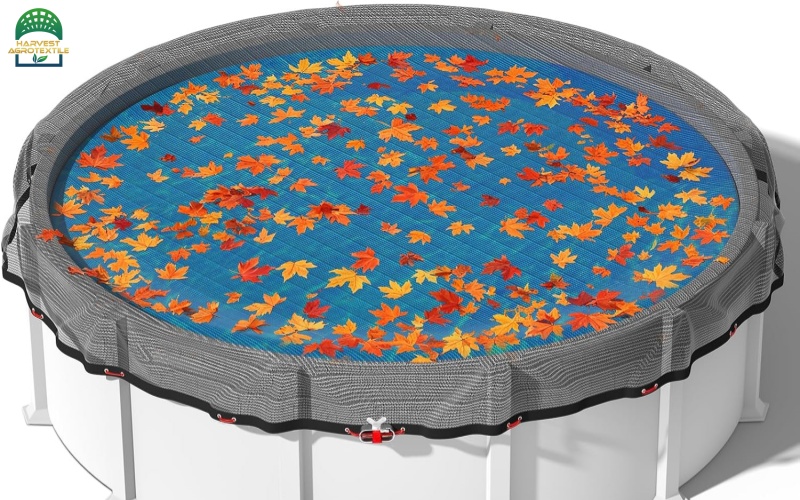
Pool netting: A Low-effort Maintenance Solution for Swimming Pools
Pool netting is a custom-fabricated mesh cover for the pool surface. Its main job is debris exclusion: leaves, dust, insects, and wind-blown material stay on top of the net instead of sinking into the water or loading the filtration system.
For this category, the mesh is the core specification. The aperture needs to be fine enough to catch the debris the buyer cares about, while still allowing water and air to pass through so the net does not become a heavy, wind-loaded solid cover. Material choice matters as well. UV-stabilized polyethylene or HDPE is common for outdoor pool netting because it balances flexibility, weather resistance, and cost.
The second key element is the edge. A pool net is only as useful as its perimeter. Reinforced borders, folded seams, rope reinforcement, and evenly spaced eyelets determine how the net tensions across the pool and how easily it can be fixed in place. Eyelet spacing should match the intended anchor layout; poor spacing creates point loading and premature tearing. For buyers comparing mesh, edge, and anchor options, the custom pool netting configuration guide provides a structured starting point.
The net is primarily a debris-management and surface-protection product. It should be specified around the pool shape, the debris load, the anchor method, and the owner’s seasonal maintenance routine—not treated as a generic mesh sheet.
What Makes Custom Netting Popular for These Two Scenarios
The rising preference for custom netting, instead of pre-cut standard sizes, comes down to three core advantages that apply to both pool and drone applications.
First is fit accuracy. Pools come in countless custom shapes, and security zones rarely match standard panel dimensions. Made-to-measure netting eliminates gaps that debris or drones can slip through, delivering the intended protective effect.
Second is material and specification flexibility. Buyers can prioritize different performance traits: UV resistance for year-round outdoor pool use, high tensile strength for absorbing drone impact, lightweight construction for easy handling, or extra tear resistance for high-wind environments.
Third is cost-effectiveness. Compared with fully automated cleaning systems for pools or electronic counter-drone hardware, netting carries a lower upfront investment and requires almost no ongoing power or maintenance after installation. It is especially attractive for users seeking passive, 24/7 protection.
Pool netting and drone netting represent just two fast-growing niches within the custom netting market. Whether the goal is reducing residential upkeep or establishing physical aerial security barriers, custom netting offers a configurable, practical protection method.
If you are exploring barrier net solutions for your space, browse our full range or reach out through the [contact page] to discuss specifications suited to your project.