

Shade Netting: UV Stabilized Shade Cloth for Greenhouse & Nursery in Southern Hemisphere
Southern hemisphere growers deal with a tough seasonal reality: peak solar radiation hits between December and February, bringing strong UV levels that can quickly damage crops and break down ordinary plastic shade covers. For commercial nurseries, propagation spaces and greenhouses across Australia, New Zealand, South Africa and Brazil, choosing reliable UV stabilized shade net is a practical investment to keep production consistent year after year.
UV stabilized shade net is made from virgin HDPE material with UV stabilizers mixed into the yarn, not just sprayed on the surface. This construction lets the net hold its light-blocking performance through repeated hot summers, instead of turning brittle, fading or tearing after just one or two growing seasons. Tested under ISO 4892-3 accelerated UV aging standards, this shade net delivers a reliable service life of 5–8 seasons under continuous outdoor exposure in high-UV southern zones, and can last longer if taken down and stored properly during off-peak months.
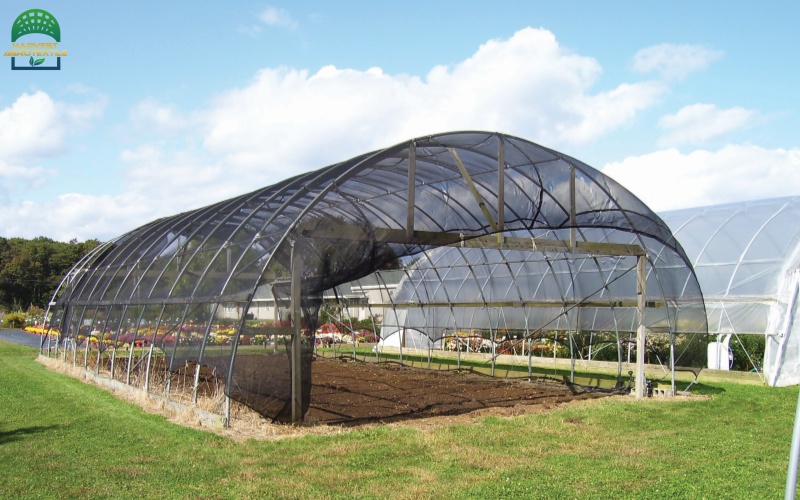
Why Southern Hemisphere Greenhouse and Nursery Operations Choose UV Stabilized Shade Net?
High UV and strong sunlight are not the only challenges. When heat builds up inside greenhouses, young seedlings, unrooted cuttings and sensitive ornamental plants easily suffer sunscald, leaf bleaching and dehydration.
Quality shade net solves this without cutting off airflow. It diffuses harsh sunlight, brings canopy temperature down and keeps photosynthetically active light within a suitable range for your crops. It works well as fixed overhead cover or movable screens, giving you flexibility to adjust light levels as seasons change.
Three key benefits for your farm:
1. Predictable light control
Shade percentage tells you how much sunlight is blocked. A 50% shade net blocks roughly half of incoming light, letting you tune light levels to match your crop needs. Propagation stock needs gentler light, while mature fruiting crops can tolerate higher light intensity.
2. Natural cooling with good air flow
Unlike solid films, shade net keeps air moving through the crop canopy. It reduces heat buildup without sealing in moisture, which helps slow fungal issues and cuts down irrigation frequency.
3. Stable performance across different climate zones
Growing conditions vary widely across the southern hemisphere, from subtropical northern Australia and coastal Brazil to cooler southern New Zealand. The same shade net can be used flexibly: deployed in summer to block midday sun, and removed or opened in winter to avoid limiting growth from insufficient light.
Recommended Shade Percentages by Crop
Pick the right shade rate based on crop type, growth stage and local peak sunlight. Keep in mind that greenhouse glass or poly covering already filters out 10–20% of incoming light, which you should factor into your planning.
-
30% shade net: Tomatoes, capsicum, cucumbers and mature herbs. Great for temperate areas, spring and autumn transitions, and subtropical greenhouses that only need midday sun suppression.
- 40–50% shade net: Leafy greens, nursery transplants, soft fruit and finished flowering ornamentals. This is the most popular option for commercial nurseries and vegetable greenhouses in the southern hemisphere.
- 60–70% shade net: Unrooted cuttings, ferns, orchids and tropical foliage propagation. This range suits mist propagation areas in hot regions during summer.
Black UV stabilized shade net is the standard choice for most commercial growing operations, with consistent light blocking performance. White and colour-selective options are available on request for growers wanting different light reflection properties.
For greenhouse and nursery growers across the southern hemisphere, shade net is a core part of crop protection. The intense summer UV means only UV stabilized HDPE shade net can hold its rated shade performance for multiple growing seasons while maintaining airflow. Matching your shade percentage to crop light needs and adjusting coverage with seasonal sunlight patterns helps reduce sun damage, stabilise growing conditions and produce more uniform seedlings and harvests.
View our UV stabilized shade net range for greenhouse and nursery production to get technical sheets, test reports and roll size options for your southern hemisphere growing site.